it-CH

In this article:
 

  • Learn how Shimano’s cup and cone bearings support smooth rolling, durability, and precise adjustment
  • Understand how hub design influences acceleration, stability, and control in high-performance road wheels
  • See how cup and cone fits into the broader DURA-ACE wheel system, from serviceability to speed on the road
play icon

When riders think about fast wheels, they usually think first about the visible parts. Rim depth. Aerodynamics. Weight. Tire size. Those things matter, and they should. They shape how a wheel cuts through the air, how quickly it comes up to speed, and how it feels on the road.


But the quality of a wheel is not defined by the rim alone.


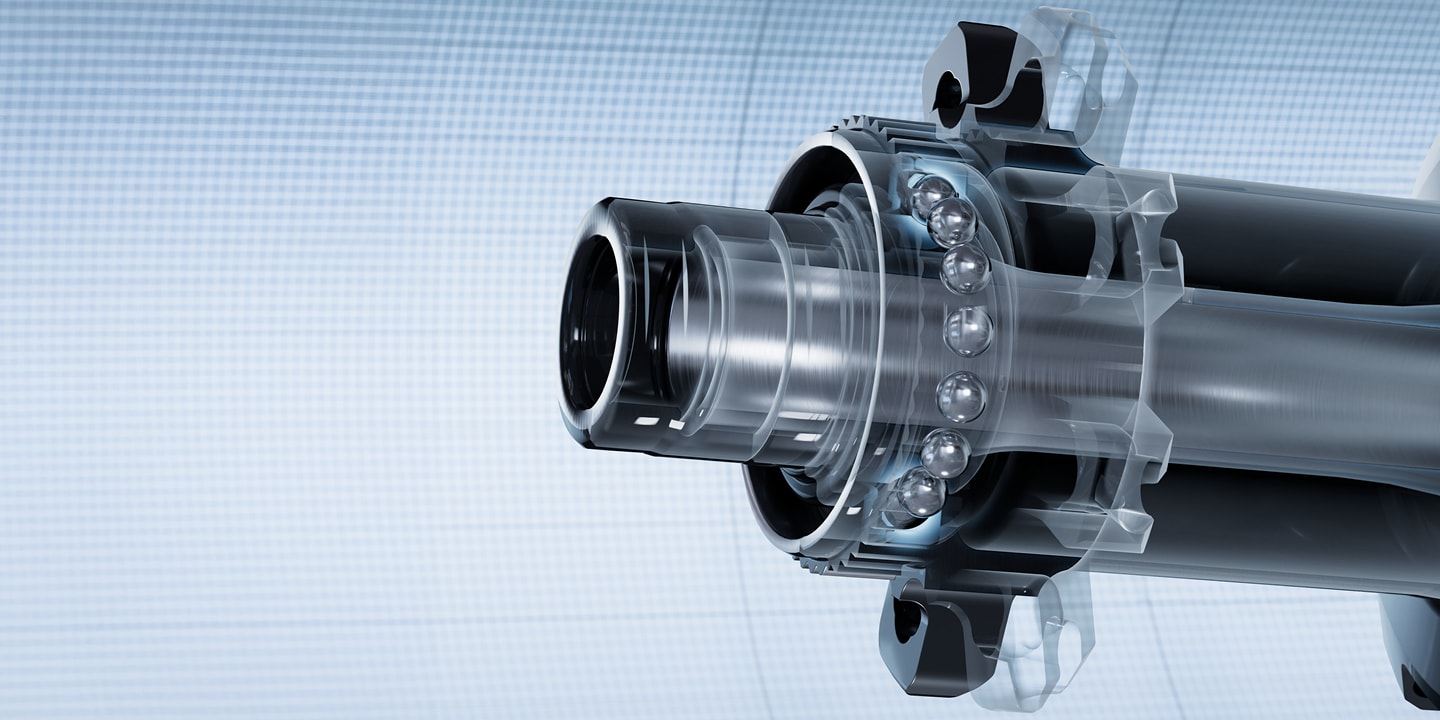
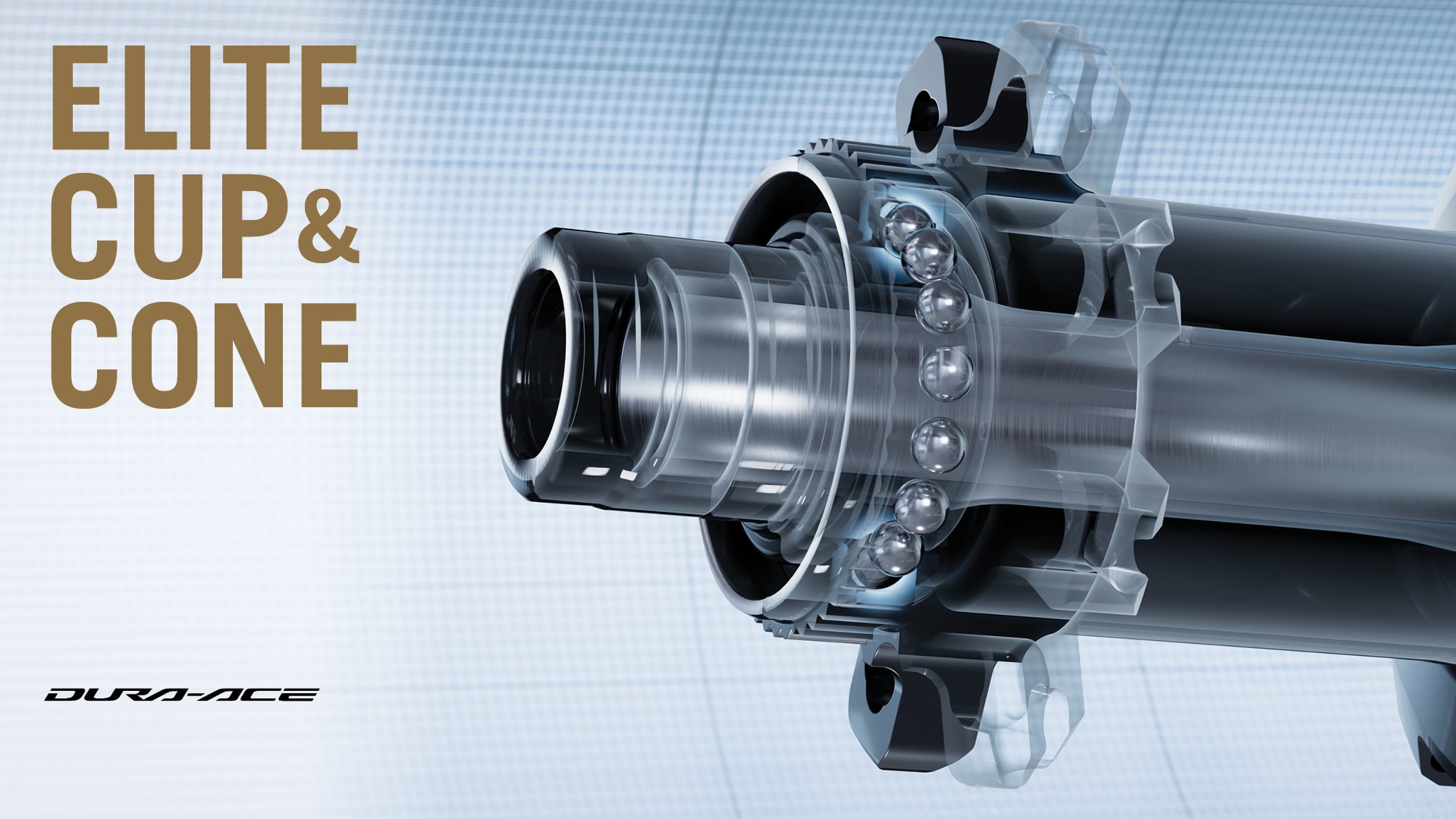
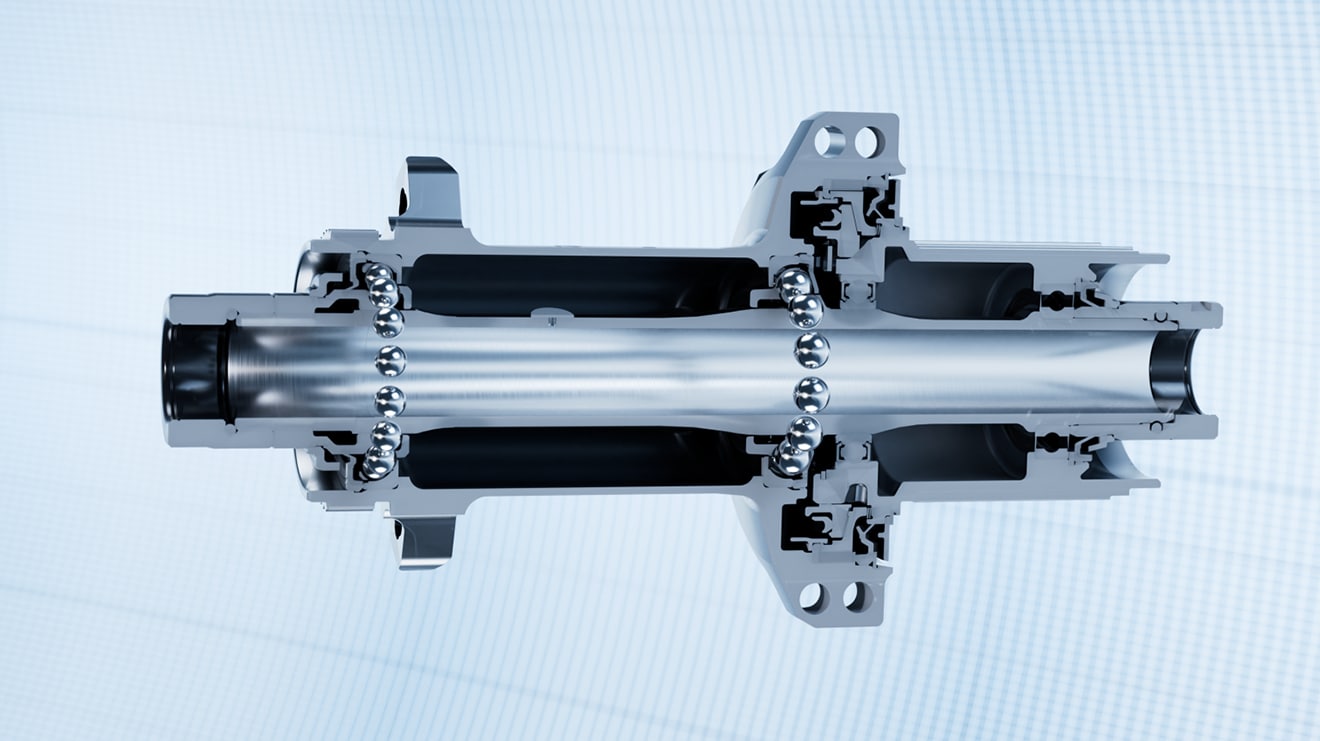
At the center of every wheel is the hub, and at the center of every hub is a decision about how the wheel should rotate, how it should carry load, and how it should perform not just when new, but over time. At Shimano, that decision is foundational. Our cup and cone bearing system uses an angular-contact bearing mechanism to manage lateral and vertical loads effectively, delivering smooth rotation, excellent durability, easy maintenance, and simple adjustment. 


That is exactly why cup and cone belongs in our highest-performing wheels. It supports the way we engineer performance: as a complete system in which speed, control, efficiency, and long-term reliability must work together. Across our performance carbon road wheels, that system includes modern rim profiles, a 21 mm internal width, tubeless-ready construction, E-THRU axle technology, and freehub designs tuned for direct power transfer. Cup and cone is part of that same design logic. 

Why the hub matters more than most riders realize

Life’s not easy for a road wheel.


It carries rider weight, absorbs road buzz, resists braking forces, reacts to sprint torque, and stays composed through corners and descents. In real riding, those loads rarely arrive one at a time. They overlap. They change direction. They build and release constantly.


That is why hub design matters so much. A high-performance wheel is not only a rim moving through air. It is a rotating structure that has to remain smooth, stable, and efficient while the rest of the bike is under stress. Our cup-and-cone system is built for exactly that job. The angular-contact layout is designed to handle both lateral and vertical loads effectively, which is why we pair it with claims of smooth rotation and excellent durability, not as separate benefits, but as connected ones. 


In other words, the hub is not a hidden detail. It is part of the ride feel. It influences how directly the wheel responds to power, how calmly it tracks under load, and how consistently it maintains both over the long term. That is a meaningful part of wheel performance, especially at the DURA-ACE level. 

R9300 DURA-ACE Wheels: Cup and Cone

Our cup‑and‑cone bearing design remains at the heart of DURA‑ACE because it delivers what performance riders value ride after ride: smooth rolling under real-world cornering and sprint loads, long-term durability, and the ability to keep everything precisely adjusted.


The result is a wheelset that stays smooth, reliable, and confidence‑inspiring. Not just when it’s new, but season after season, with new waterproof sealing to keep performance consistent in all conditions.


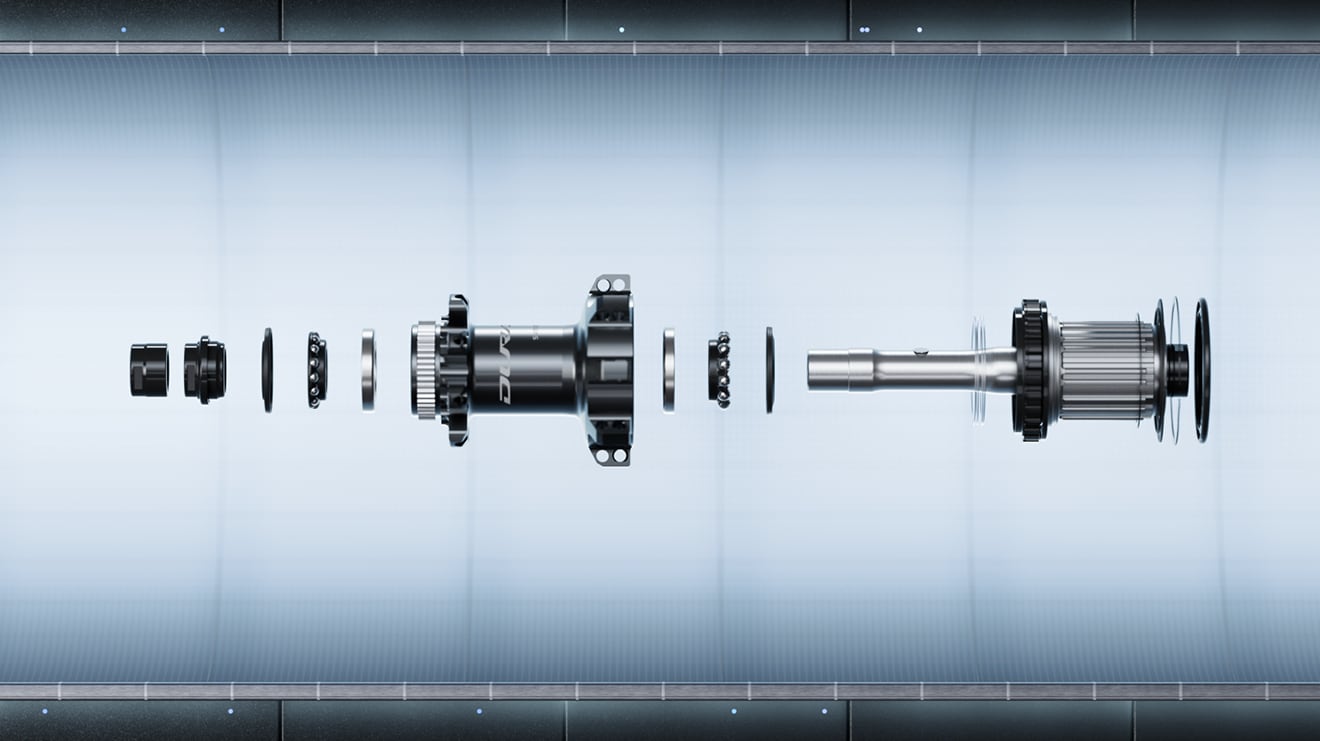
The R9300 DURA‑ACE cup‑and‑cone system is fully serviceable, allowing the bearings to be removed and maintained individually. Instead of replacing the entire hub, worn components can be refreshed as needed, helping preserve performance and extend the life of the wheel.

What a cup and cone bearing system does

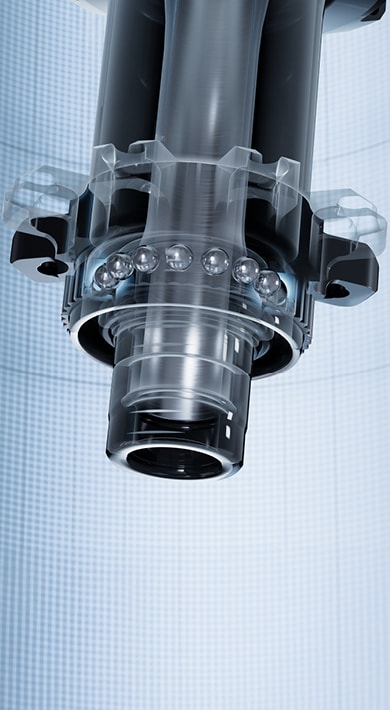
In a Shimano cup-and-cone hub, the bearings run on precisely machined races formed by the cup in the hub body and the cone on the axle. The system is adjustable, which means bearing preload can be set accurately and then secured in place. Our dealer manuals reflect that architecture clearly: they show axle removal, grease application, seal handling, preload adjustment, and double-locking of the assembly as part of the service procedure. 


That matters because adjustment is not an afterthought. It is part of the design. A hub that can be tuned precisely can also be maintained in its intended performance window, rather than simply tolerated until wear or roughness forces replacement. Our cup and cone technology page states this directly: high durability, easy maintenance, and simple adjustment are core features of the system. 


This is one of the strengths of cup-and-cone. It is engineered not just to rotate, but to stay correct.

Smooth rotation is part of speed

A fast wheel should feel efficient in the wind. It should also feel efficient at the axle.


That is where smooth rotation becomes a performance trait. Our cup-and-cone system is designed to roll smoothly under real-world riding loads. On SHIMANO 105 hubs, for example, we use internal o-rings, a grease sleeve, and high-quality cup-and-cone bearings to deliver high durability and smooth rolling for sustained performance. 


A smooth hub is not just about first impressions in the workstand. It is about minimizing internal resistance while preserving stability and correct adjustment over time. In practical terms, that means the rider experiences a wheel that continues to feel refined and controlled across long mileage, varied weather, and repeated use. It also means smoothness is being treated as something engineered and maintained, not something temporary. 

The importance of load handling

Road wheels are loaded in more than one direction. That sounds obvious, but it is where bearing design becomes especially important.


When you sprint, the wheel has to respond to torque cleanly. When you descend, it has to stay composed at speed. When you corner, the hub is dealing with lateral force as well as vertical load. When you brake on a modern road disc bike, the system is asked to remain stable under another layer of input.


Our cup-and-cone system is an angular-contact mechanism that effectively handles lateral and vertical loads. That is central to its value. Because in high-performance riding, it is not enough for a hub to feel smooth in a straight line and at low load. It has to remain smooth and durable when the wheel is leaned over, loaded up, and driven hard again. 


This is also where cup and cone aligns naturally with our wheel philosophy. In the Science of Speed, our wheels balance rigidity, aerodynamics, and low weight, with rim depths tailored to different ride demands and a DIRECT-ENGAGEMENT freehub system for a more connected pedaling feel. That balance only works if the hub remains stable and efficient under real conditions. Cup-and-cone supports that whole-system approach. 

Cornering confidence starts with control

Great cornering is never about a single component. Tire choice matters. Rim profile matters. Pressure matters. Spoke layout, frame stiffness, and rider skill all matter too.


But the hub matters here as well. A wheel that corners confidently needs to remain predictable under combined loads. The rider should feel control, not vagueness. Precision, not hesitation. That is part of why our wheel systems are designed the way they are. We pair aerodynamic rim development with lateral rigidity, wider modern internal widths, and axle technologies that maximize lateral stiffness and simplify installation.


Our E-THRU system, for example, allows maximum lateral rigidity while keeping wheel removal straightforward. Meanwhile, our D2 rim thinking is explicitly built around real-world wind conditions rather than laboratory straight-line assumptions alone. 


Cup and cone belongs inside that picture because the hub has to remain smooth and controlled while the rest of the wheel is doing its work. The benefit is not a dramatic headline claim. It is something better: a wheel that feels composed when the road, the speed, and the rider are all asking more of it. 

Serviceability is a performance feature

There is a tendency in cycling to treat serviceability as separate from performance, as though one belongs to mechanics and the other to riders. We do not see it that way.


For the rider, the benefit is straightforward. The hub can be cleaned, regreased, adjusted, and returned to its intended state. Small issues can be corrected before they become larger ones. Performance can be preserved rather than simply replaced. That is one reason our technology page explicitly links cup and cone to easy maintenance and simple adjustment alongside durability. 


It is also why this bearing architecture continues to make sense at the top end. Premium wheels should reward ownership, not just purchase.

Why cup and cone suits performance road wheels so well

The easiest mistake in wheel design is to optimize for what is easiest to advertise. The harder and better path is to optimize for what riders actually experience over time.


That is where cup and cone excels.


It suits high-performance road wheels because it combines several things riders need at once: smooth rolling, precise setup, durability under mixed loads, and serviceability over the life of the wheel. Our own product and technology materials keep returning to exactly that cluster of benefits: angular-contact load handling, smooth rotation, durability, sealing, and long-term performance belong together. 


That consistency shows that cup and cone is not an isolated legacy choice within our lineup. It is part of a broader engineering philosophy: select the solution that best supports the whole ride, not just the simplest story. 

Cup and cone versus cartridge: two different priorities

Both bearing systems exist for a reason. But they emphasize different things.


Cartridge bearings center on modular replacement. Cup and cone centers on tuneability, service, and controlled performance over time. Our own technology language makes that distinction clear by emphasizing adjustability and serviceability as explicit advantages of cup and cone. Then there is the different load-distribution behavior between cups, cones and industrial bearings. 


That difference matters in practice. In a wheel built for real mileage, repeated hard use, and long-term ownership, the ability to adjust and maintain the hub is not just a side benefit, it is part of the product’s value. And in a high-performance system where smoothness, control, and durability all matter, that value becomes even more important. 

Performance that endures

The best wheels do more than feel fast on a good day.


They accelerate with purpose. They hold speed with ease. They corner with calm. They stay precise on bad roads, during long rides, and in changing conditions. And they keep doing those things long after the novelty of a new build has faded.


That is why the cup-and-cone system remains so important in our wheel technology. It supports the kind of performance we care about most: speed you can feel, control you can trust, and quality that holds its character over time.


In short, we’re talking smooth rotation, excellent durability, easy maintenance and simple adjustment. In practice, those four ideas are central to a bearing system with a very clear job: to keep the wheel performing the way a high-performance wheel should. 


Because in high-performance cycling, the most important technologies are often the ones that quietly keep everything else working at its best.