

en-NZ

It is impossible to overstate SHIMANO’s contribution to the advancement of mountain bike drivetrain technology. From the earliest iterations of RAPIDFIRE to today’s 12-speed Di2 electronic systems, SHIMANO’s been at the forefront of improved MTB shifting performance, delivering expanded gear ranges, quieter drivetrains, enhanced chain retention, and improved shifting precision and control even in the most technical terrain.


SHIMANO continues to help improve the on-trail experience for mountain bikers worldwide. Here is a look at some, but certainly not all, of the most important moments in the nearly four-decade march forward from downtube-mounted friction shifters of old to today’s fast, precise, robust, and reliable Di2 electronic systems.
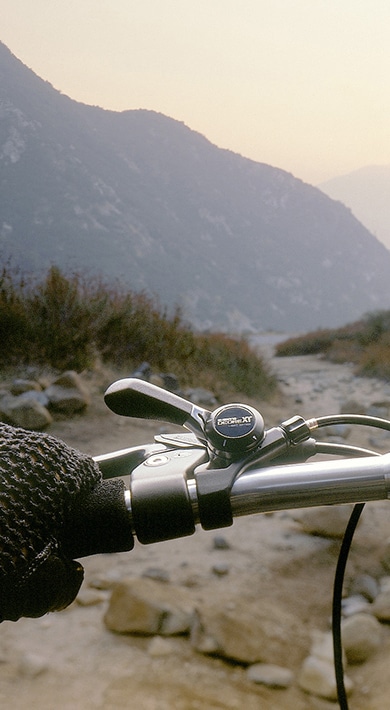
Shimano MTB Technology RAPIDFIRE PLUS


What: RAPIDFIRE PLUS and HYPERGLIDE Technology


When: Early 1990s


What it did: Enhanced ergonomics, faster shifting speed, easier shift actuation, and lower overall drivetrain weight.


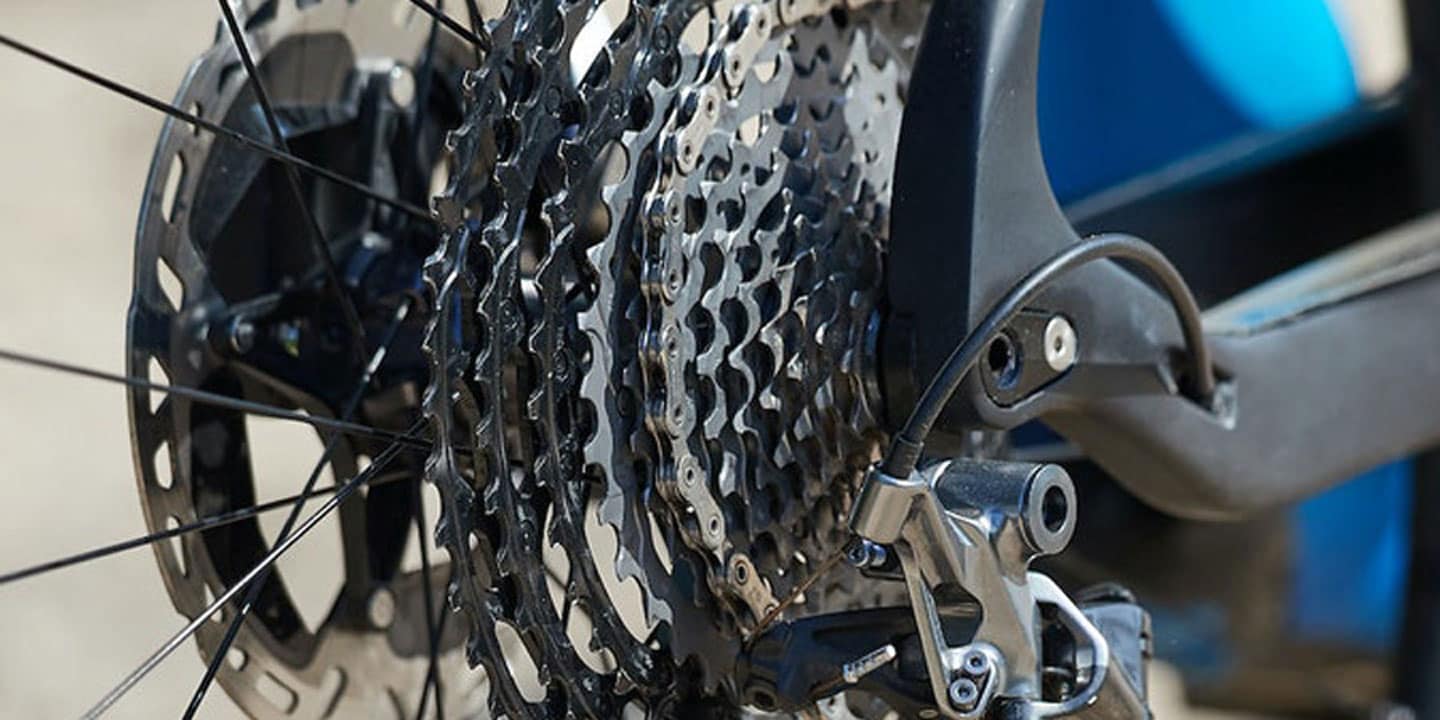
Why it mattered: Assigned roles for downshift and upshift levers to thumb and index finger, respectively, allowing riders to shift gears more easily while maintaining a firm grip on the handlebar - an especially important feature when navigating technical terrain. Also provided multi-shift capability, enabling riders to shift gears more quickly. Meanwhile, HYPERGLIDE ended the era where shifting under heavy pedaling load often caused chains to slip. With this update, riders benefited from specially profiled gear teeth and shift ramps that guided the chain smoothly up and down the cassette without letting it drop or grind, even when shifting while pedaling.


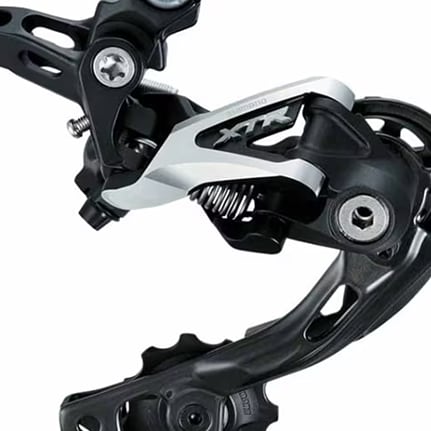
What: RAPID RISE Rear Derailleur


When: 1998


What it did: Achieved lighter operability and improved shifting performance. This time period also saw the progression from 6- and 7-speed drivetrains to 8- and 9-speed, which meant wider gear ranges.

 

Why it mattered: Wider gear ranges allowed mountain bikers to more easily climb and descend in the right gear, and delivered tighter gear steps in between for smoother pedaling cadence.
Shimano RAPID RISE Rear Derailleur
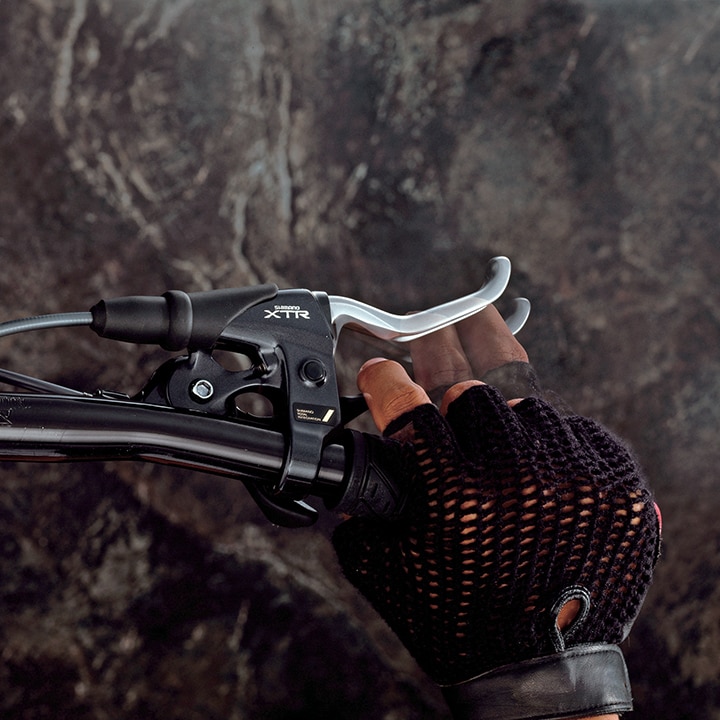
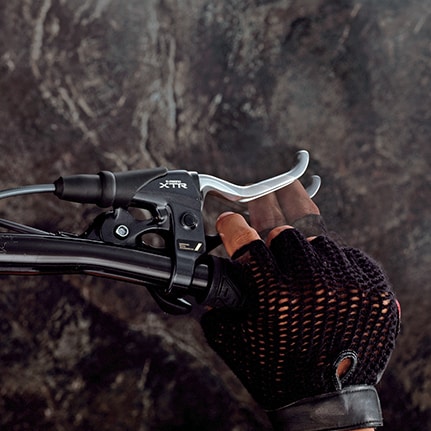
Shimano DUAL CONTROL Levers MTB technology


What: DUAL CONTROL LEVERS


When: 2002


What it did: While polarizing with some, this new shifting system enabled riders to shift more quickly than ever before, reaffirming SHIMANO’s relentless pursuit of improving the mountain biking experience.


Why it mattered: Improved rider control, especially during intense efforts on technical terrain.


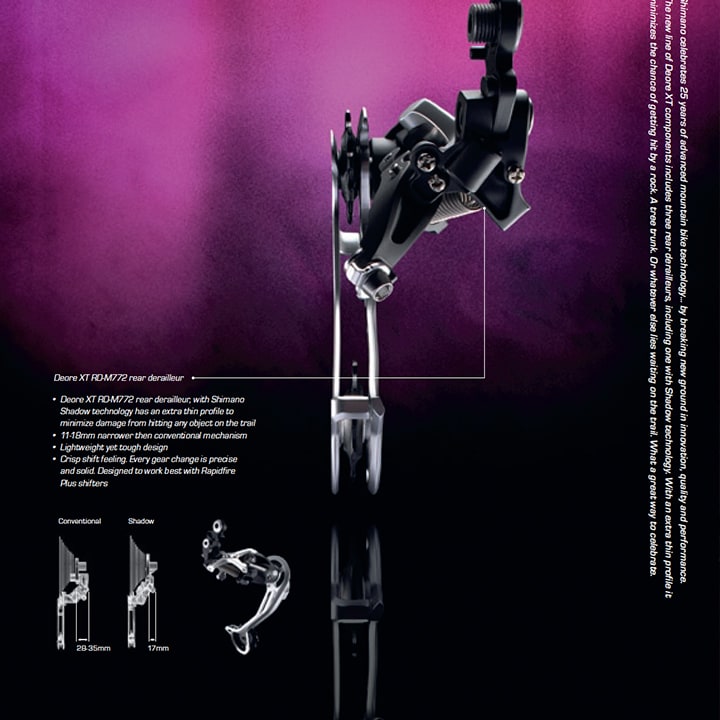
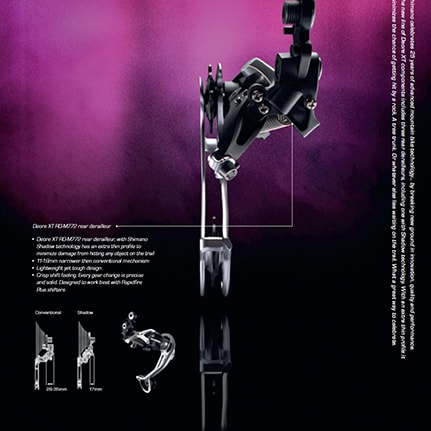
What: SHADOW Rear Derailleur Technology


When: 2008


What it did: Introduced a low-profile derailleur design


Why it mattered: A lower-profile design resulted in fewer catastrophic rock strikes and improved chain stability and retention, which was especially important for more aggressive trail and enduro riding.

Shimano SHADOW Rear Derailleur Technology
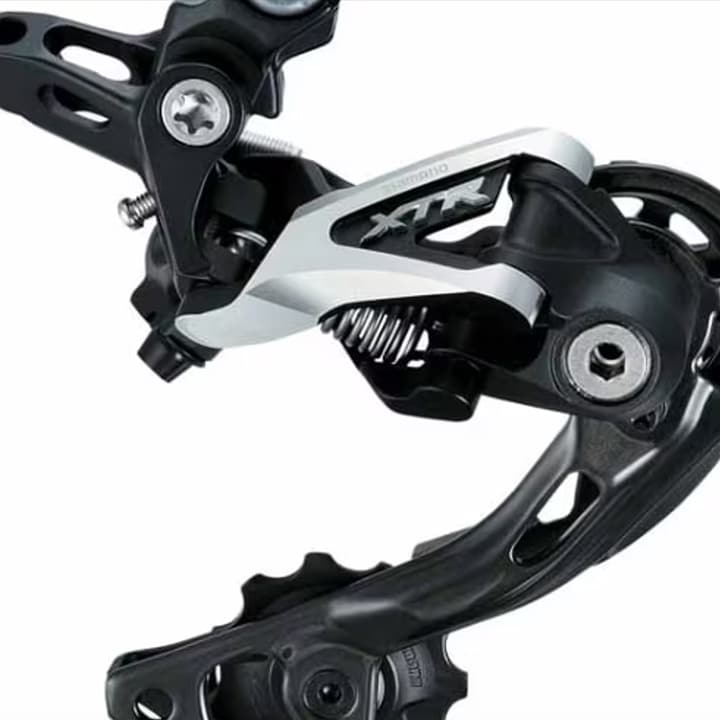
Shimano SHADOW+ RD Technology XTR


What: XTR M980 Series Drivetrain


When: 2010


What it did: Introduced SHIMANO’s first 10-speed mountain bike drivetrain.


Why it mattered: The new system included a clutch-equipped rear derailleur that dramatically improved chain retention. The wider gear range further expanded what was possible on a mountain bike.


What: SHADOW+ Rear Derailleur Technology


When: 2010


What it did: Improved clutch technology, dramatically reducing chain slap and improving chain retention.


Why it mattered: Latest enhancements in clutch technology further quieted the drivetrain and reduced dropped chains, an especially important development along the path to today’s ubiquitous 1x drivetrains.

Shimano Mountain bike technology
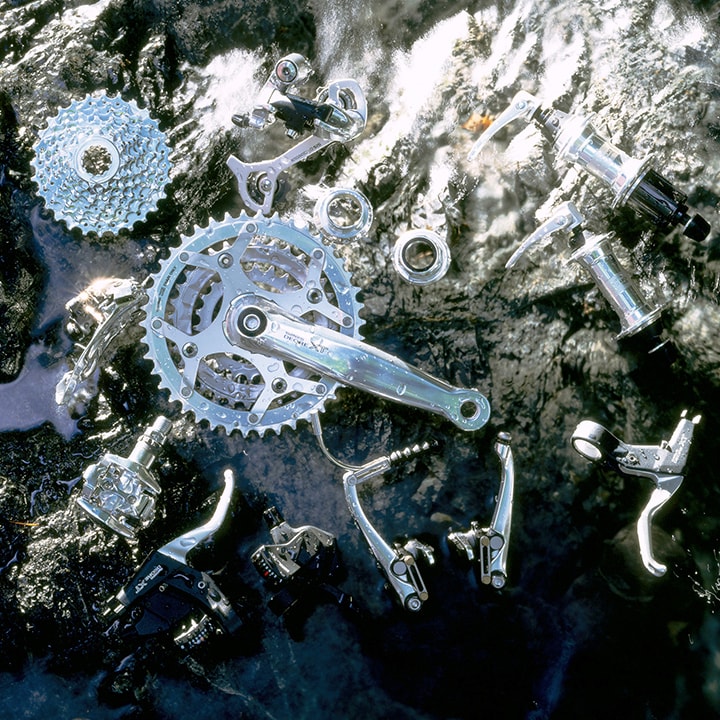
SHimano MTB History XTR


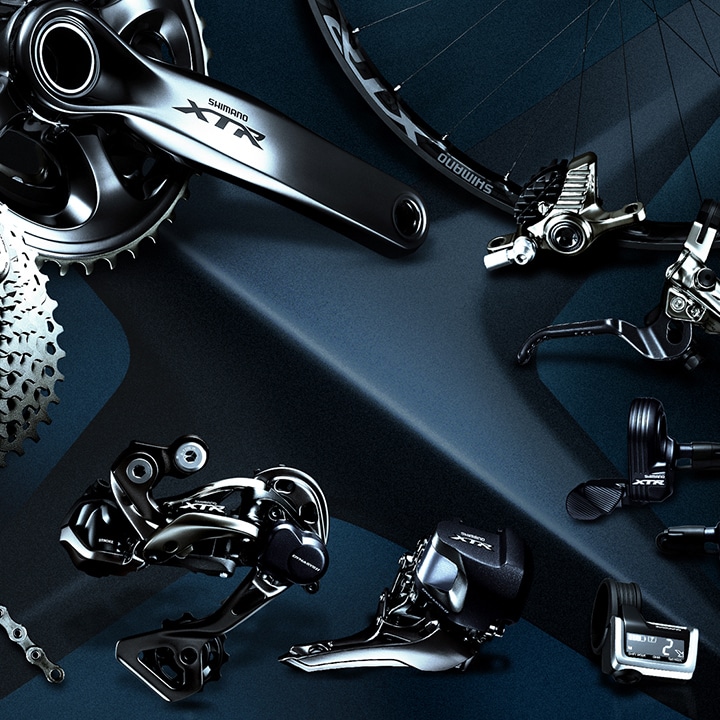
What: XTR M9000 and 9050 Series


When: 2014


What it did: Introduced an 11-speed drivetrain system, further expanding gear range, and saw the debut of Di2 electronic shifting for mountain bikes.


Why it mattered: Initial foray into digital shifting significantly improved shifting performance, all but eliminating issues with cable friction, mud buildup, system contamination, and long-term wear. Also debuted SHIMANO SYNCHRONIZED SHIFT technology, which gave riders worry-free precision control and gave riders a new level of setup customization.


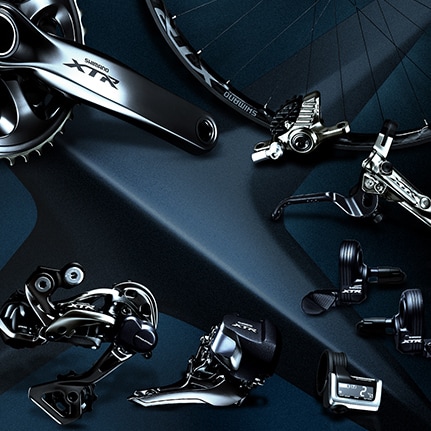
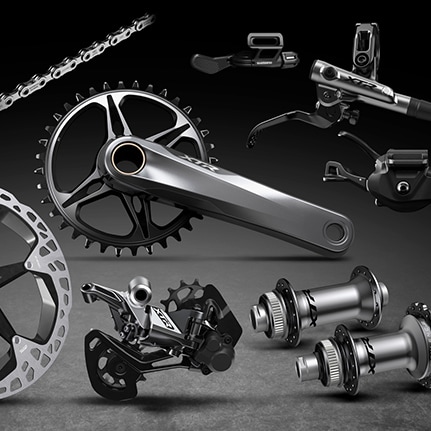
What: XTR 9100 Series


When: 2018


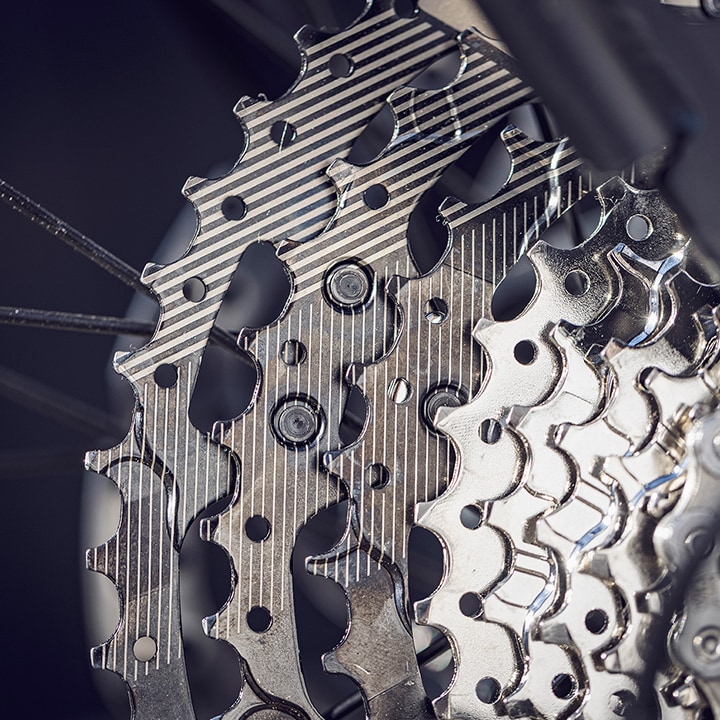
What it did: Unveiled HYPERGLIDE+ technology with its uniquely shaped shift ramps that seamlessly guide the chain up or down the cassette, even under extreme pedaling load by maintaining continuous engagement between chain and cassette. The result was faster, smoother, and more secure shifting, whether launching an attack, accelerating on a climb, or sprinting at full power.


Why it mattered: SHIMANO’s fastest and smoothest mountain bike shifting speed to date allowed riders to smoothly change gears even when standing up and sprinting or hammering up a steep climb.

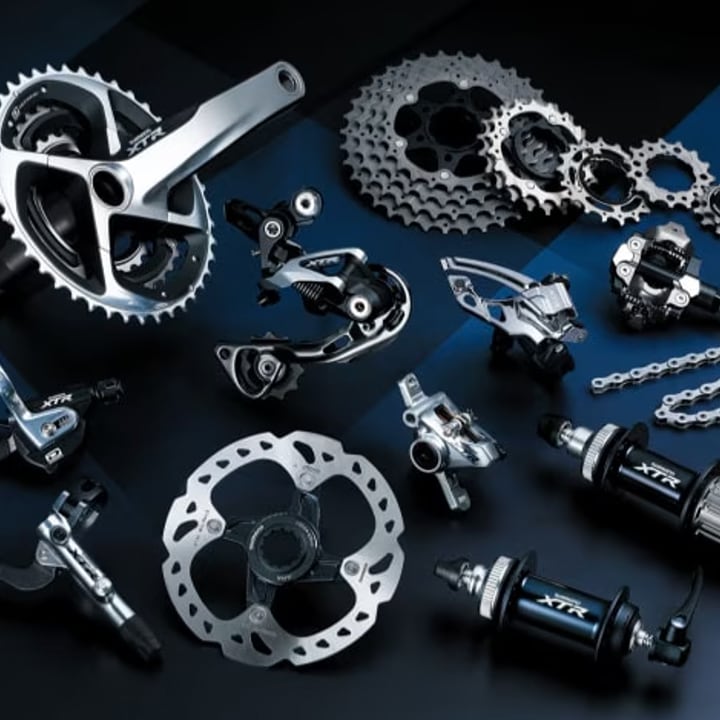
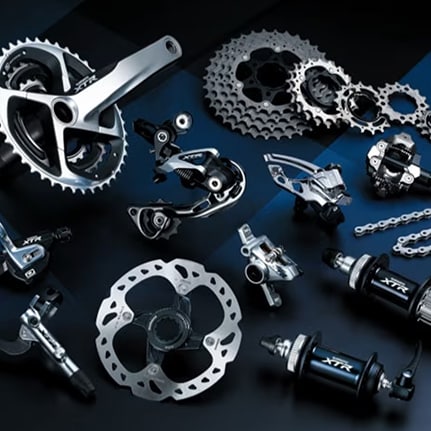
Shimano XTR M9100 Mountain bike parts
Shimano LINKGLIDE shifting technology


What: LINKGLIDE Technology


When: 2021


What it did: Prioritized durability and seamlessly smooth shifting under load.


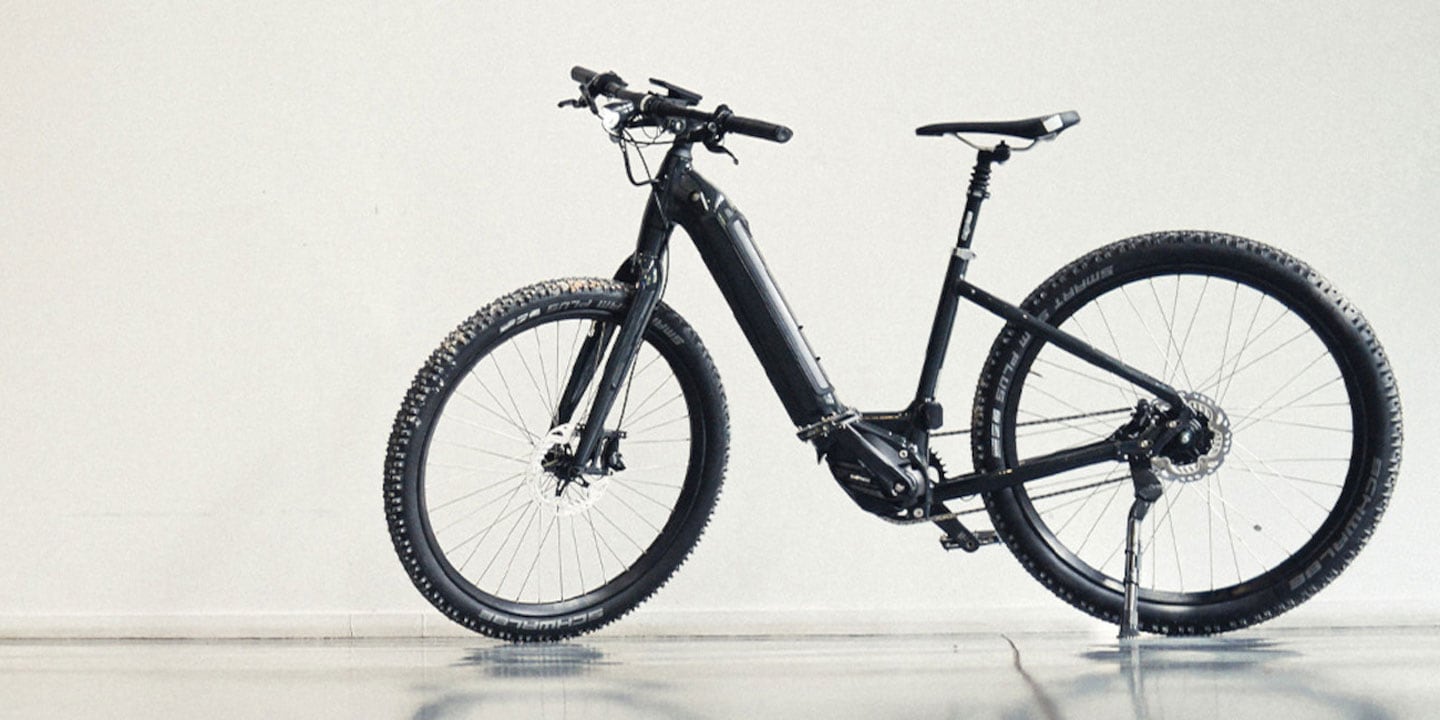
Why it mattered: With cassettes that featured thicker, specially profiled teeth designed to endure up to three times the mileage of standard HYPERGLIDE drivetrains, LINKGLIDE broke new ground in terms of reliability and longevity. Its smoother shifting and reduced pedal shock during shifts—even under heavy load or high torque—were especially welcomed by the burgeoning e-MTB market segment.


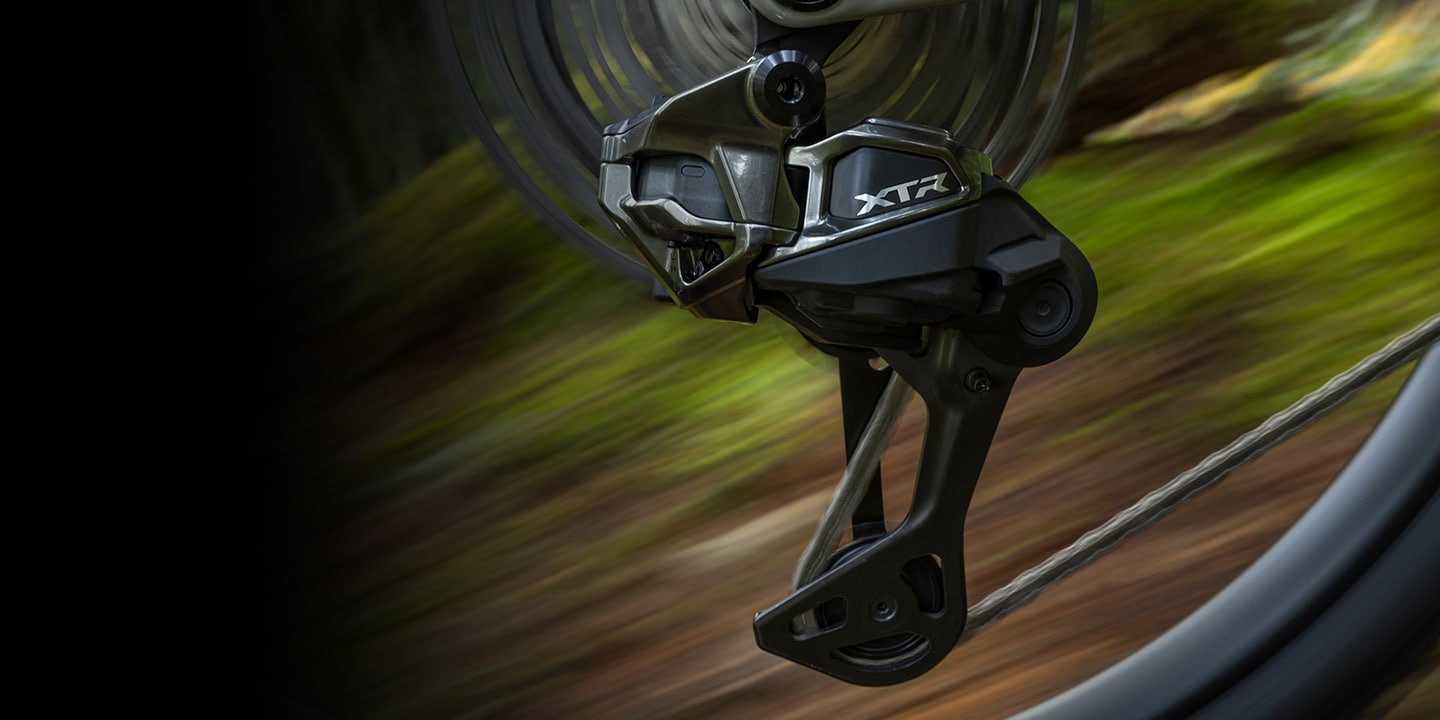
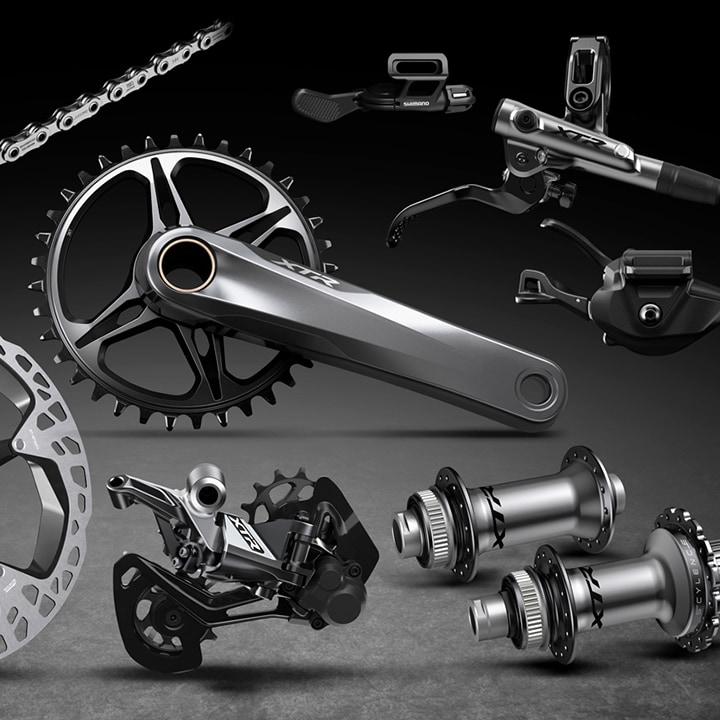
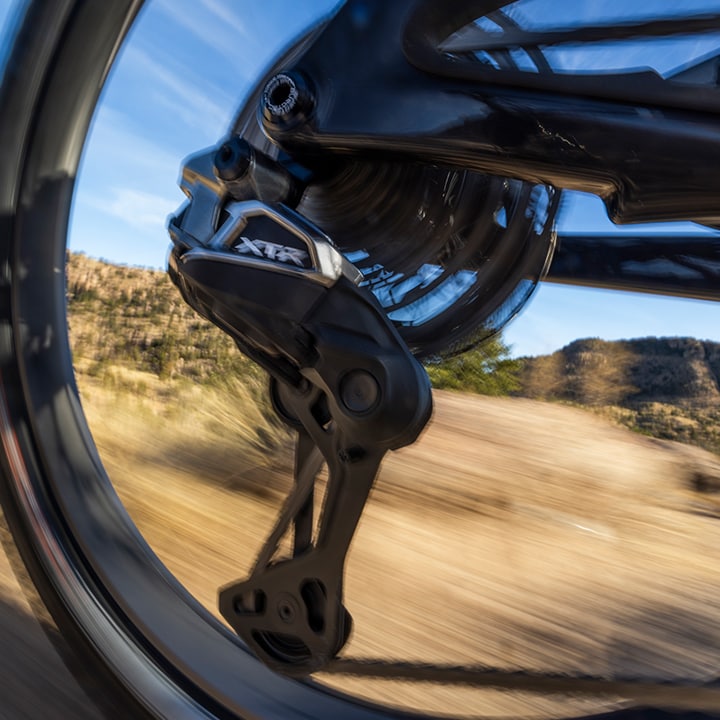
What: M9250 Series Drivetrain


When: 2025


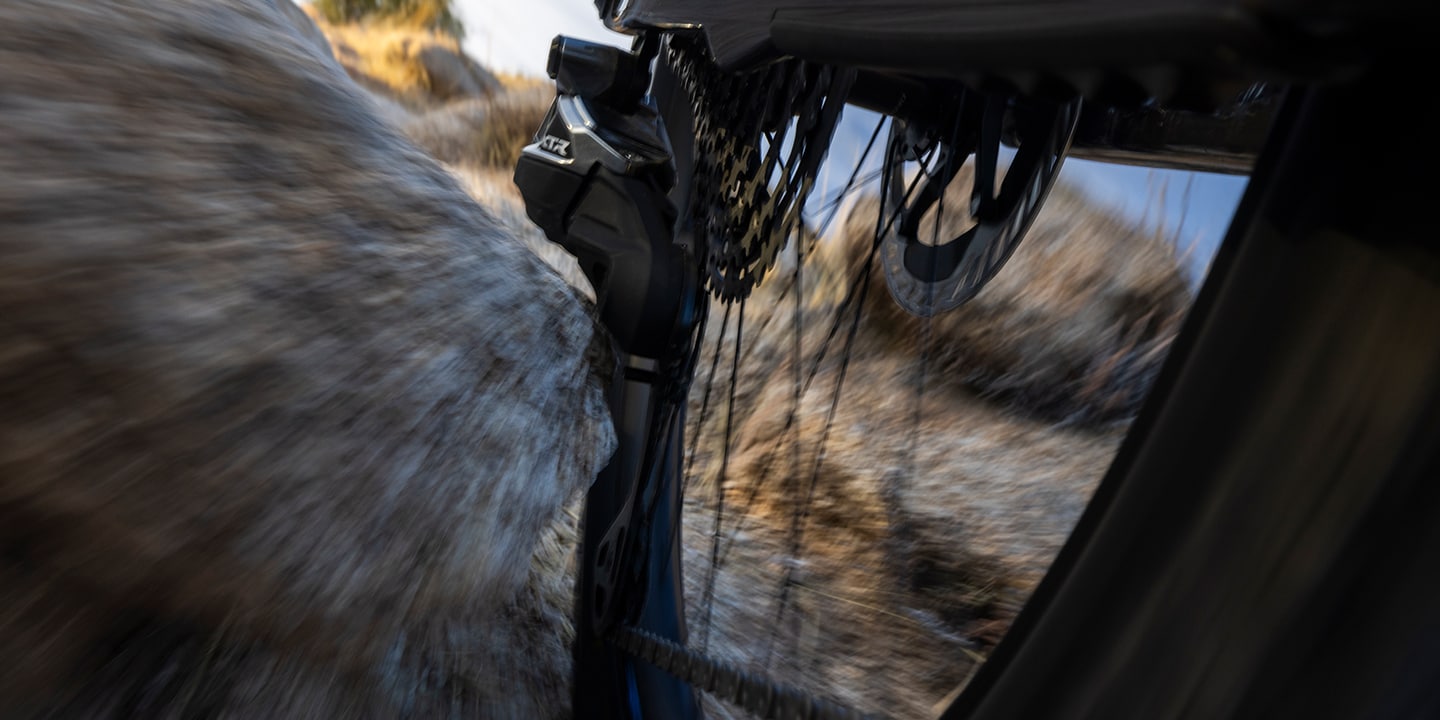
What it did: Unveiled 12-speed wireless Di2 electronic shifting


Why it mattered: Introduced SHIMANO AUTO SHIFT and FREE SHIFT functionality, along with impressive rear derailleur impact recovery capability, rapid shift speed, and best-in-class system durability. This meant faster and more consistent shifting performance.

Shimano XTR M9200 Di2